
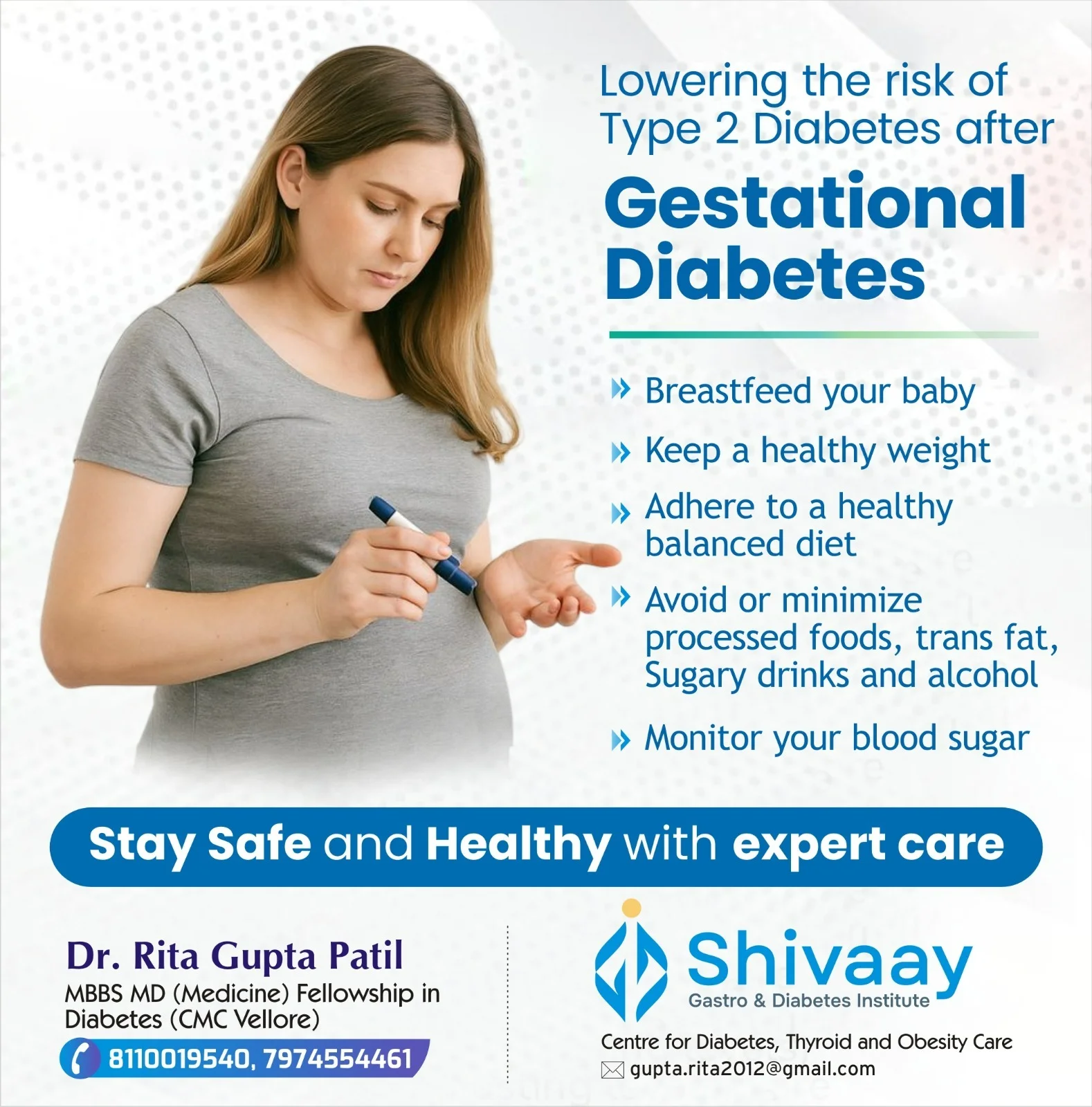
Gestational diabetes is a form of high blood sugar first diagnosed during pregnancy. In many women, blood glucose returns to a normal range after delivery, but the story does not always end there. A history of gestational diabetes increases the chance of developing Type 2 diabetes later in life, which makes postpartum follow-up, healthy lifestyle habits, and regular blood sugar monitoring especially important. The CDC notes that about half of women who have gestational diabetes may later develop Type 2 diabetes.
For women seeking professional diabetes care in Indore, Dr. Rita Gupta Patil provides evaluation and guidance for gestational diabetes, postpartum glucose monitoring, weight management, and long-term diabetes prevention. The aim after delivery is not simply to assume the diabetes has disappeared, but to understand future risk and take practical steps to reduce it.
Gestational Diabetes Mellitus (GDM) develops during pregnancy when blood glucose becomes higher than normal. It is most commonly diagnosed around the second or third trimester, often between 24 and 28 weeks.
During pregnancy, hormonal changes can make the body less responsive to insulin. If the pancreas cannot produce enough additional insulin to compensate, blood glucose levels rise.
Some women experience no obvious symptoms, which is why routine screening during pregnancy is important. ACOG recommends screening for gestational diabetes during pregnancy, generally between 24 and 28 weeks for women who have not already been identified as having diabetes.
Women who develop gestational diabetes have already demonstrated that their body can have difficulty maintaining normal glucose levels when insulin resistance increases.
Although blood sugar may normalize after childbirth, the underlying tendency toward insulin resistance may remain.
Both the CDC and NIDDK identify a previous history of gestational diabetes as an important risk factor for future Type 2 diabetes.
This does not mean every woman with gestational diabetes will eventually develop diabetes. It means that long-term prevention and monitoring deserve greater attention.
One of the most important steps after gestational diabetes is checking whether blood sugar has returned to a healthy range.
The CDC recommends diabetes testing after delivery, traditionally around 6 to 12 weeks postpartum, while professional guidance also emphasizes ongoing screening later in life because the increased risk continues.
Depending on individual circumstances, testing may include:
A doctor can recommend the most appropriate test based on pregnancy history and current health.
Type 2 diabetes and prediabetes can develop without obvious symptoms.
You may feel completely healthy while blood glucose gradually rises.
This is why women searching for a diabetes specialist in Indore after gestational diabetes should consider follow-up even when:
Regular screening can help detect abnormal glucose levels before complications develop.
Returning gradually toward a healthy weight can be an important part of reducing future metabolic risk.
NIDDK notes that slowly returning to a healthy weight after pregnancy may lower the chances of diabetes and other weight-related health conditions.
The goal should not be rapid weight loss immediately after childbirth.
Instead, focus on sustainable habits such as:
Postpartum weight management should consider breastfeeding, recovery from delivery, medical conditions, and individual nutritional needs.
Healthy eating after gestational diabetes does not require extreme restriction.
A practical eating pattern can include:
Try to reduce frequent consumption of:
Healthy food choices and physical activity may reduce the chance of developing Type 2 diabetes after gestational diabetes.
Regular physical activity improves insulin sensitivity and supports weight management.
After your doctor confirms that exercise is safe following delivery, activity can gradually become part of your routine.
Examples may include:
The right exercise plan depends on delivery type, recovery, fitness level, and existing medical conditions.
Consistency is generally more valuable than occasional intense exercise.
Breastfeeding has many established benefits for mother and baby and may form part of healthy postpartum care.
However, breastfeeding should not be presented as a guaranteed way to prevent Type 2 diabetes.
Women who breastfeed still need:
Your long-term prevention plan should rely on several healthy habits rather than a single action.
Women who have had gestational diabetes may need glucose screening periodically even years after pregnancy.
NIDDK notes that women with a history of gestational diabetes should continue regular screening, with frequency depending on postpartum test results and risk status.
Your doctor may recommend more frequent monitoring if you also have:
Do not wait for symptoms before checking glucose.
Sometimes postpartum testing does not show diabetes but reveals prediabetes.
Prediabetes means glucose levels are above the normal range but not yet high enough to meet the diagnostic criteria for diabetes.
This is an important opportunity for prevention.
Lifestyle intervention involving healthy eating, activity, and weight management can reduce the progression from prediabetes to Type 2 diabetes in appropriate individuals.
Follow-up is particularly important if postpartum testing shows borderline glucose levels.
Women with previous gestational diabetes also have an increased risk of experiencing gestational diabetes in a future pregnancy.
If you are planning another pregnancy, discuss:
Preconception medical review can help identify risks before pregnancy begins.
Caring for a newborn often means interrupted sleep, irregular meals, and reduced time for exercise.
These challenges are real, but even small improvements can support metabolic health.
Consider practical strategies such as:
A prevention plan needs to fit real postpartum life rather than demanding an unrealistic routine.
Future Type 2 diabetes risk may be higher in women who also have additional metabolic risk factors.
These may include:
Women with several risk factors may benefit from closer follow-up with a diabetologist in Indore.
Online advice often focuses only on dieting, but postpartum diabetes prevention requires a broader approach.
Professional evaluation can help with:
Medical advice is especially valuable when glucose remains abnormal after delivery.
Not every woman who had gestational diabetes needs medication after childbirth.
If glucose levels return to normal, lifestyle management and monitoring may be sufficient.
If testing shows persistent diabetes or another glucose abnormality, treatment should be determined according to the diagnosis.
Never continue or stop diabetes medicine used during pregnancy without discussing it with your healthcare provider.
Women looking for gestational diabetes treatment in Indore may need care both during pregnancy and after delivery.
During pregnancy, management may include:
After childbirth, attention shifts toward:
Gestational diabetes should therefore be considered an important marker of future metabolic health rather than only a temporary pregnancy complication.
A practical approach can be summarized in five important steps:
Do not miss glucose testing after delivery.
Choose gradual, realistic weight management rather than crash diets.
Prioritize nutrient-rich foods and reduce highly processed foods and sugary beverages.
Gradually build regular activity according to medical advice.
Your increased diabetes risk continues even when the first postpartum test is normal.
At Dr. Rita Gupta Patil, women searching for gestational diabetes care in Indore can seek personalized guidance for glucose monitoring, weight management, diabetes prevention, and long-term metabolic health.
Blood glucose often improves after childbirth, but women who have had gestational diabetes remain at increased risk of developing Type 2 diabetes later.
Postpartum diabetes screening is recommended after delivery, commonly within the first several weeks, followed by ongoing screening according to your results and risk profile.
Yes. Maintaining a healthy weight, choosing healthy foods, and staying physically active can help reduce future Type 2 diabetes risk.
Yes. Women who have had gestational diabetes are at increased risk of developing it again in a future pregnancy.
A history of gestational diabetes should be treated as an opportunity to protect your future health. Even when glucose returns to normal after pregnancy, regular screening, healthy eating, physical activity, and sustainable weight management remain important because the risk of Type 2 diabetes after gestational diabetes continues over time.
If you are looking for professional Gestational Diabetes Care in Indore, schedule a consultation for personalized postpartum glucose monitoring and long-term diabetes prevention guidance.
Contact Us today to take a proactive step toward healthier blood sugar, better metabolic health, and a lower future risk of Type 2 diabetes.
| Tags: | #Lowering the Risk of Type 2 Diabetes After Gestational Diabetes |


