


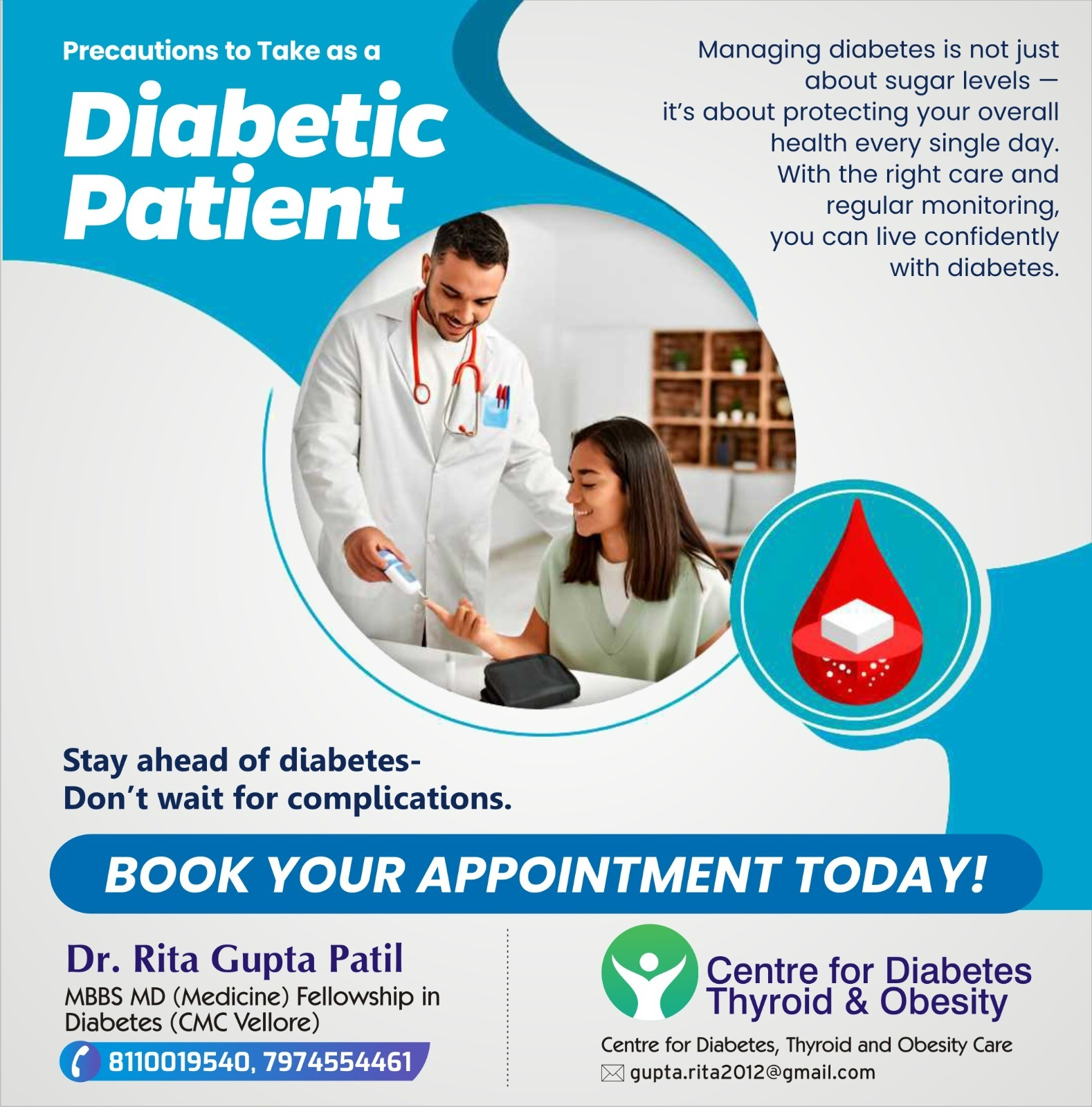
Diabetic Patient in Indore
Diabetes is a long-term health condition that needs daily attention, balanced lifestyle habits, and regular medical monitoring. It is not only about controlling sugar levels; it is also about protecting your heart, kidneys, eyes, nerves, feet, weight, immunity, and overall quality of life. With the right precautions, a person living with diabetes can stay active, confident, and healthier for years.
If you are searching for Precautions to Take as a Diabetic Patient in Indore, this guide will help you understand practical steps to manage diabetes better. From diet and exercise to regular checkups and blood sugar monitoring, every small action plays an important role in preventing complications.
For people who need professional diabetes guidance, Centre for Diabetes Thyroid & Obesity provides diabetes care support focused on regular monitoring, lifestyle awareness, and patient-centered consultation.
Diabetes occurs when the body is unable to properly use or produce insulin, leading to high blood sugar levels. If blood sugar remains uncontrolled for a long time, it can affect different organs and increase the risk of serious health complications.
That is why diabetes care in Indore should focus on prevention, early detection, and consistent control. Many patients feel fine even when their sugar levels are high, but silent damage can continue inside the body. Regular monitoring and timely medical advice can help reduce these risks.
Diabetes precautions are important because they help:
· Maintain stable blood sugar levels
· Prevent sudden sugar fluctuations
· Reduce risk of heart disease
· Protect kidney function
· Prevent eye-related complications
· Reduce nerve damage risk
· Improve energy and daily activity
· Support better weight management
· Improve long-term health confidence
One of the most important precautions for a diabetic patient is regular sugar monitoring. Checking blood glucose helps you understand how your body responds to food, exercise, stress, sleep, and medication.
Your doctor may advise fasting sugar, post-meal sugar, random sugar, or HbA1c testing depending on your health condition. HbA1c gives an average idea of blood sugar control over the past few months.
Regular monitoring helps answer important questions such as:
· Is your current diet working well?
· Are medicines controlling sugar properly?
· Is your sugar rising after meals?
· Are you facing frequent low sugar episodes?
· Do you need lifestyle or treatment adjustments?
Patients looking for diabetes monitoring in Indore should follow a planned checkup schedule instead of testing only when symptoms appear.
Diet plays a central role in diabetes management. A diabetic diet does not mean you have to stop eating everything you like. It means choosing the right food, controlling portion size, eating at regular times, and avoiding sudden sugar spikes.
A healthy diabetic plate should include:
· High-fiber vegetables
· Whole grains in controlled quantity
· Protein-rich foods
· Healthy fats in moderation
· Low-glycemic fruits
· Plenty of water
· Limited fried and processed food
Try to avoid or reduce:
· Sugary drinks
· Sweets and desserts
· Refined flour items
· Deep-fried snacks
· Excess white rice
· Packaged juices
· Bakery items
· High-salt processed foods
For diabetic patients in Indore, local food habits should be managed carefully. Poha, sev, kachori, samosa, sweets, and fried snacks are commonly enjoyed, but they should be consumed wisely and occasionally under medical or diet guidance.
Exercise helps the body use insulin better and supports blood sugar control. It also improves heart health, weight management, energy levels, and mood. Even simple daily walking can make a positive difference.
Useful physical activities for diabetic patients include:
· Brisk walking
· Light jogging
· Yoga
· Cycling
· Swimming
· Strength training
· Stretching exercises
· Home-based workouts
Most adults with diabetes can benefit from at least 30 minutes of moderate physical activity on most days. However, patients with heart problems, joint pain, neuropathy, or other health conditions should consult a doctor before starting a new exercise routine.
Diabetes medicines and insulin should be taken exactly as prescribed. Skipping doses, changing timing, or stopping medicine without medical advice can lead to uncontrolled sugar levels.
Many patients stop medicine when sugar becomes normal, but this can be risky. Normal sugar readings often mean the treatment plan is working, not that diabetes has disappeared.
Important medicine-related precautions include:
· Take medicine at the advised time
· Do not self-adjust dosage
· Keep insulin stored properly if prescribed
· Inform your doctor about side effects
· Carry medicine while traveling
· Do not use another patient’s medicine
· Follow up regularly for dose review
Low blood sugar, also called hypoglycemia, can happen when meals are skipped, medicine dose is high, physical activity increases suddenly, or food intake is delayed. It can be dangerous if not managed quickly.
Common symptoms of low sugar include:
· Sweating
· Shaking
· Dizziness
· Hunger
· Weakness
· Confusion
· Fast heartbeat
· Irritability
· Blurred vision
A diabetic patient should know how to handle low sugar safely. Keep a quick sugar source as advised by your doctor, especially while traveling or exercising.
Foot care is very important for people with diabetes. High sugar levels can affect nerves and blood circulation, making wounds heal slowly. Small cuts, cracks, or shoe bites can become serious if ignored.
Daily foot care tips include:
· Check feet every day
· Wash and dry feet properly
· Avoid walking barefoot
· Wear comfortable footwear
· Cut nails carefully
· Do not ignore swelling or wounds
· Keep skin moisturized but avoid applying cream between toes
· Visit a doctor for non-healing wounds
People searching for diabetic foot care in Indore should seek early medical guidance if they notice numbness, burning, tingling, wounds, redness, or pain in the feet.
Diabetes management needs complete health monitoring, not just sugar testing. Regular checkups help detect complications at an early stage.
A diabetic patient may need routine evaluation of:
· HbA1c levels
· Blood pressure
· Cholesterol
· Kidney function
· Eye health
· Foot health
· Weight and BMI
· Liver function
· Thyroid function if advised
· Heart health
Regular visits to a diabetes doctor in Indore help patients understand their progress and make necessary changes in diet, medicine, or lifestyle.
Excess weight can increase insulin resistance and make diabetes harder to control. Even modest weight loss can improve sugar levels, energy, and overall health. Weight management should be healthy and gradual, not based on crash diets.
Helpful steps include:
· Eating balanced meals
· Avoiding overeating at night
· Reducing sugary and fried foods
· Walking daily
· Sleeping properly
· Managing stress eating
· Tracking progress regularly
Weight loss should be planned under professional guidance, especially for patients taking diabetes medicines or insulin.
Diabetes increases the risk of heart and blood vessel problems. High blood pressure and high cholesterol can make this risk greater. That is why diabetic patients should monitor these conditions regularly.
Heart-protective habits include:
· Limiting salt intake
· Avoiding smoking and tobacco
· Staying physically active
· Eating fiber-rich food
· Reducing fried snacks
· Managing stress
· Taking prescribed medicines regularly
· Going for routine health checks
Diabetes can affect the retina and may lead to vision problems if not detected early. Many eye complications develop silently, so regular eye checkups are important even when vision appears normal.
You should consult an eye specialist if you notice:
· Blurred vision
· Frequent change in glasses number
· Dark spots in vision
· Difficulty seeing at night
· Eye pain or pressure
· Sudden vision changes
Annual eye screening is often advised for diabetic patients.
Stress can raise blood sugar levels and affect eating habits, sleep quality, and motivation. Poor sleep can also disturb hormonal balance and sugar control.
To manage stress better:
· Practice deep breathing
· Follow a fixed sleep routine
· Avoid late-night heavy meals
· Reduce screen time before bed
· Spend time with family
· Try yoga or meditation
· Discuss emotional stress with a doctor if needed
Good mental health supports better diabetes management.
Indore is a busy city with active work schedules, food culture, travel, and social lifestyle. These factors can affect diabetes control if not managed properly. People living in Vijay Nagar, Palasia, Bengali Square, Annapurna Road, Rau, Bhanwarkuan, Kanadia Road, Tilak Nagar, Rajendra Nagar, Sudama Nagar, and nearby areas should prioritize regular follow-ups and preventive health care.
Choosing professional diabetes treatment in Indore helps patients receive personalized guidance based on lifestyle, eating habits, sugar levels, age, weight, and associated health conditions.
Do not delay medical consultation if you notice:
· Very high sugar readings repeatedly
· Frequent low sugar episodes
· Sudden weight loss
· Excessive thirst or urination
· Non-healing wounds
· Chest discomfort
· Severe weakness
· Blurred vision
· Numbness or burning in feet
· Vomiting or dehydration
Early action can prevent serious complications and improve recovery.
The most important precautions include regular sugar monitoring, balanced diet, daily physical activity, timely medicine, foot care, eye checkups, and routine doctor visits.
The frequency depends on the patient’s condition, medicine, insulin use, and doctor’s advice. Some patients need daily monitoring, while others may need scheduled testing and HbA1c every few months.
Some early-stage or prediabetic patients may improve with lifestyle changes, but many need medicines or insulin. Treatment should always be decided by a qualified doctor.
Diabetes can reduce sensation and blood flow in the feet. Small injuries may go unnoticed and heal slowly, so daily foot care and early treatment are very important.
Diabetes management is a daily commitment, but with the right precautions, regular monitoring, healthy food choices, exercise, medicine discipline, and timely checkups, patients can live confidently and reduce the risk of complications. If you are looking for Precautions to Take as a Diabetic Patient in Indore, focus on consistent care rather than waiting for problems to appear.
For personalized support, routine diabetes consultation, and preventive care guidance, Centre for Diabetes Thyroid & Obesity can help you take better control of your health.
Contact Us today to book your appointment and stay ahead of diabetes with proper care, regular monitoring, and expert guidance.
| Tags: | #Diabetic Patient in Indore |


