
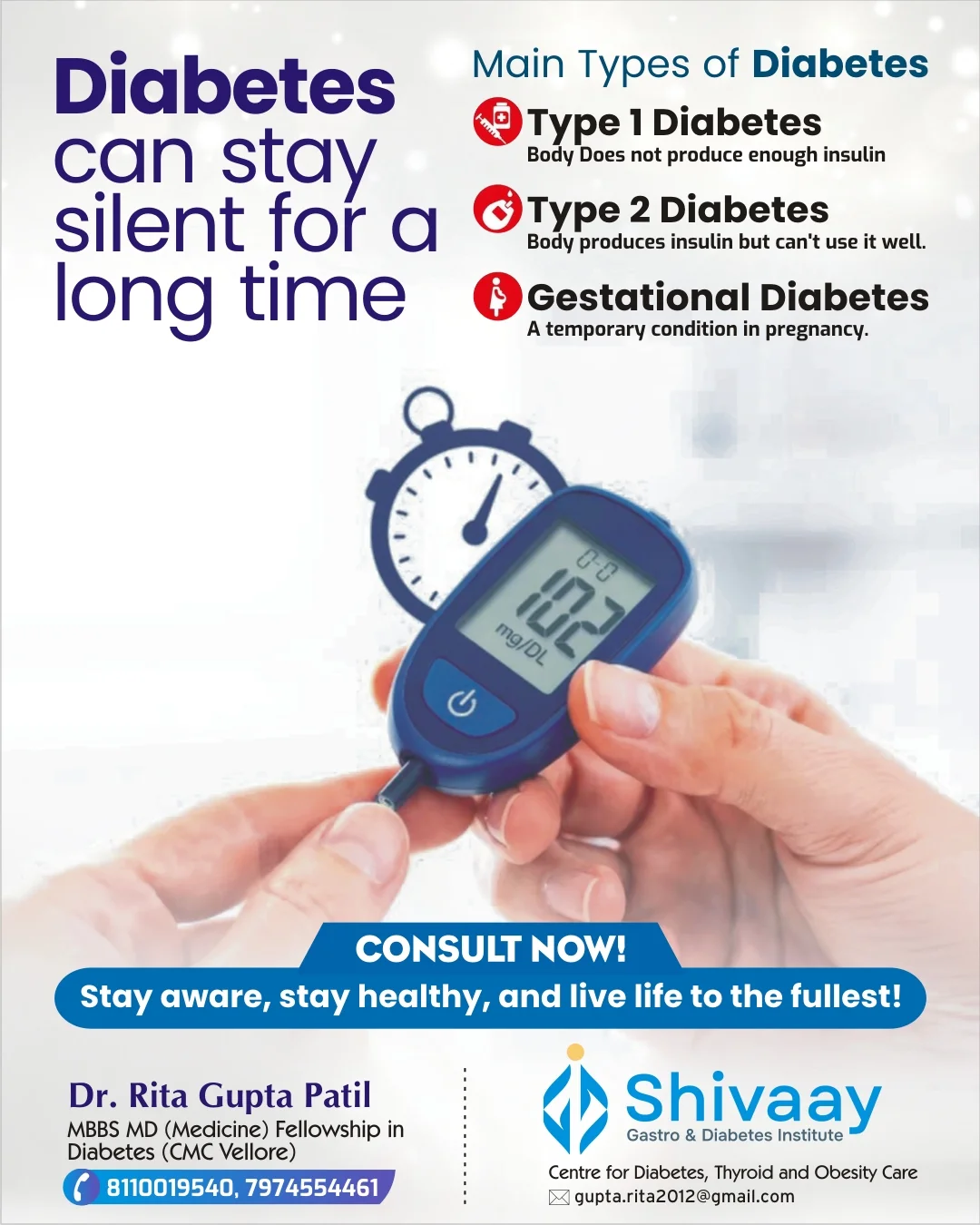
You can feel well, manage a busy day, and still have blood sugar levels that need attention. Type 2 diabetes may develop gradually, with symptoms that are mild or absent. For anyone considering diabetes treatment in Indore, this is an important starting point: feeling healthy does not always tell you whether your glucose levels are within a healthy range.
Understanding the main types of diabetes can make screening, diagnosis, and follow-up less confusing. The aim is to recognise when assessment is needed and understand what your reports mean.
For a consultation, you can contact Dr. Rita Gupta Patil at Shivaay Gastro & Diabetes Institute to discuss symptoms, existing test results, or concerns about diabetes risk.
It is easy to explain away tiredness as a demanding week or frequent thirst as a busy afternoon. With type 2 diabetes, changes may be gradual enough to attract little attention. Some people learn about the condition through blood tests before noticing symptoms.
This is why diabetes screening is different from waiting until you feel unwell. Screening looks for a problem when there may be no obvious warning sign.
A doctor considers your symptoms, medical history, and risk factors before recommending appropriate testing.
Diabetes involves blood glucose being too high. Insulin, a hormone made by the pancreas, helps glucose enter cells for energy. Problems with insulin production, insulin action, or both can allow glucose to build up in the blood.
In type 1 diabetes, the immune system attacks the pancreatic cells that produce insulin. The body then makes little or no insulin.
It can develop in children or adults. Insulin treatment is essential, and care includes learning how to monitor glucose and manage daily needs. Symptoms may appear quickly, so new thirst, frequent urination, and unexplained weight loss deserve prompt assessment.
With type 2 diabetes, the body does not use insulin effectively, and insulin production may become insufficient to maintain healthy glucose levels.
This type often develops over time. Treatment is individualised and may involve lifestyle changes, medicines, and sometimes insulin. The diagnosis cannot be reliably identified from age, appearance, or symptoms alone.
Gestational diabetes develops during pregnancy in someone who did not already have diabetes. Pregnancy-related changes can increase the body’s insulin needs.
It frequently causes no noticeable symptoms, making antenatal testing important. Glucose levels often improve after childbirth, but follow-up testing is still necessary. A history of gestational diabetes also increases the chance of developing type 2 diabetes later.
Possible early symptoms of diabetes include:
These symptoms do not prove that someone has diabetes. They do provide a reason to seek assessment, particularly when several changes appear together or continue without an explanation.
Write down when the symptoms started and whether they are becoming more noticeable. That information can make a consultation more useful.
People with a family history of type 2 diabetes, overweight or obesity, limited physical activity, previous gestational diabetes, or known prediabetes should discuss their risk with a doctor.
Having a risk factor does not make diabetes inevitable. It means that testing and prevention advice may be relevant.
If you are arranging diabetes screening in Indore, mention previous abnormal reports, pregnancy history, and any current symptoms. Your doctor can advise which tests are appropriate and how often reassessment is needed.
A home glucose reading can be useful for monitoring when advised, but a consumer glucometer should not be used on its own to diagnose diabetes.
Depending on your circumstances, assessment may include:
This measures blood glucose after a prescribed fasting period. Follow the preparation instructions supplied by your clinician or laboratory.
An HbA1c test reflects average blood glucose over roughly the previous three months. It is useful in diagnosing type 2 diabetes and monitoring diabetes, although certain health conditions can affect its accuracy.
This assesses how glucose levels respond after a measured glucose drink. It may be used in specific diagnostic situations, including pregnancy-related assessment.
Your doctor interprets the results in context. Confirmation with another test is often needed, especially when there are no clear symptoms. Ask what each result means rather than comparing an isolated number with someone else’s report.
Blood sugar management involves more than reaching a number on one report. A care plan should consider the diabetes type, medicines, daily routine, other health conditions, and the person’s ability to follow the plan.
The discussion may cover glucose monitoring, medicine use, blood pressure, cholesterol, and appropriate checks for diabetes-related health problems.
Ask for clear instructions about follow-up and what to do if readings fall outside your agreed range. Treatment goals and monitoring schedules can differ between people.
If you already take diabetes medicine, bring the prescription to your review. Discuss any side effects, missed doses, or difficulties with the schedule instead of quietly abandoning treatment.
A workable routine is more useful than a short burst of strict changes. Food choices, portion sizes, activity, sleep, and prescribed treatment all have a place in diabetes care.
Describe your usual meals honestly, including roti, rice, dal, snacks, sweetened drinks, and food eaten outside the home. Your doctor or dietitian can help you understand suitable portions and meal planning.
Discuss physical activity that fits your health and mobility. If you use insulin or medicines that can cause low glucose, ask how meals and activity should be coordinated.
Small, consistent adjustments can be easier to maintain than following a diet copied from someone with different needs.
Before visiting a diabetes doctor in Indore, gather:
Mention practical difficulties, such as rotating work shifts, travel, or irregular meals. These details help frame a discussion around daily life.
Before leaving, make sure you understand the next step, any requested tests, and when to return.
Vomiting, abdominal pain, trouble breathing, fruity-smelling breath, severe weakness, or fainting alongside diabetes symptoms can signal diabetic ketoacidosis. This is a medical emergency.
Seek emergency medical care rather than waiting for a routine appointment. Such symptoms need urgent assessment, including in someone who has not previously been diagnosed with diabetes.
Yes. Type 2 diabetes can occur without noticeable symptoms. Whether you need screening depends on your risk factors and clinical assessment, not thirst alone.
No. A home reading needs context and professional review. Laboratory testing and, in many cases, repeat testing are used to establish the diagnosis.
No. Type 1 diabetes can begin in adulthood as well. Type 2 diabetes can also affect children, so age alone does not establish the type.
Yes. Blood glucose may return to normal after delivery, but postpartum testing and future checks remain important because the risk of type 2 diabetes is higher.
Discuss this with your treating doctor before making changes. Improved readings may reflect the treatment working. Any adjustment should follow a review of your overall progress.
You do not need to wait for pronounced symptoms before discussing diabetes risk. An assessment can help you understand whether testing, treatment, or continued monitoring is appropriate.
For diabetes treatment in Indore, consult Dr. Rita Gupta Patil at Shivaay Gastro & Diabetes Institute to discuss your concerns and plan the next step.
Contact Us Today to Book Your Diabetes Consultation.
| Tags: | #Diabetes treatment in Indore |


