
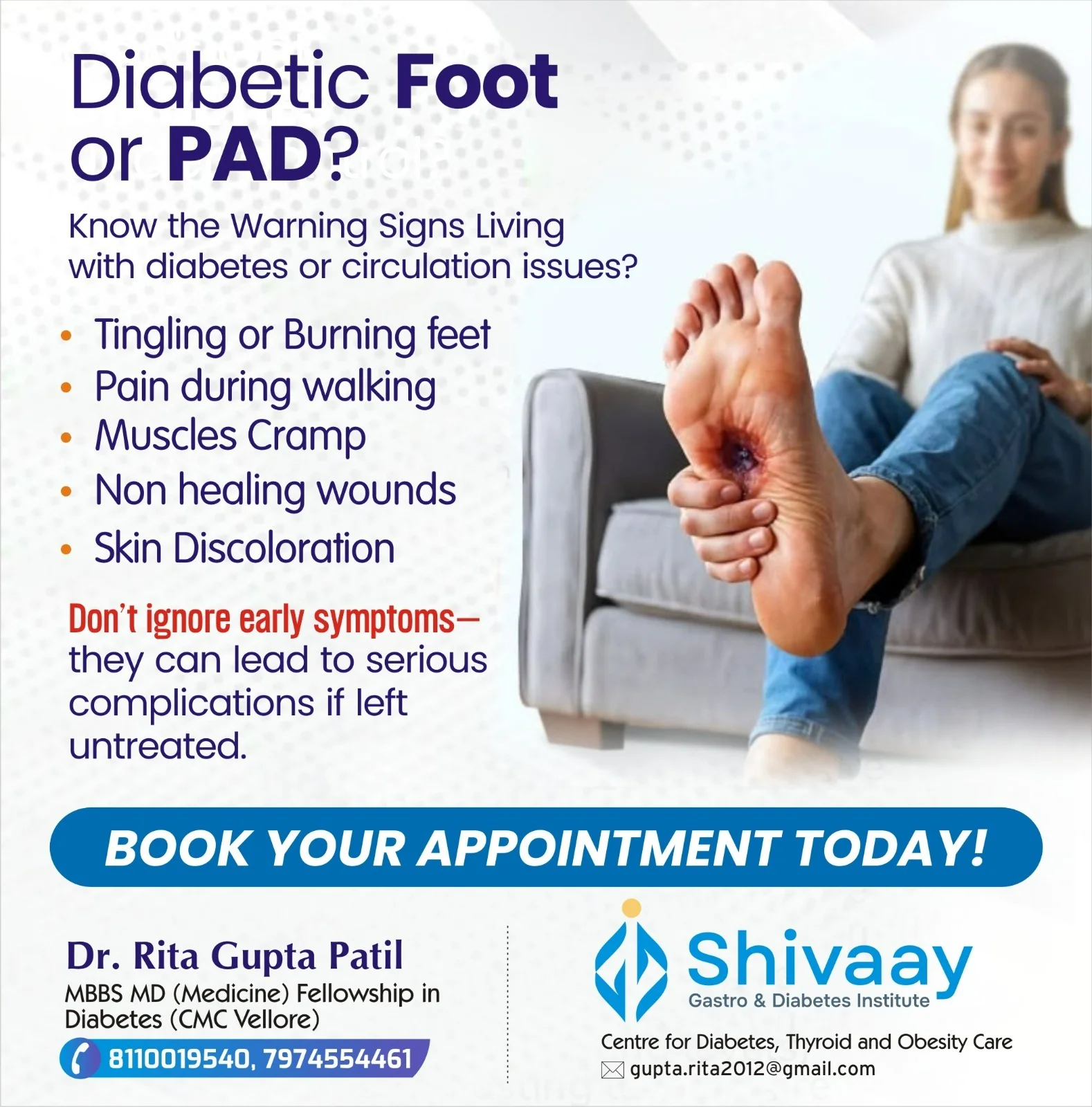
Diabetic Foot and Peripheral Artery Disease in Indore: Warning Signs, Risks and Timely Care
Foot problems in people with diabetes should never be treated as minor inconveniences. Persistent tingling, burning sensations, pain while walking, skin colour changes, muscle cramps, or a wound that is slow to heal may indicate problems involving the nerves, blood circulation, or both. Early medical assessment is important because delayed treatment can increase the risk of infection, tissue damage, and other serious complications.
For people looking for diabetic foot treatment in Indore, understanding the difference between diabetic neuropathy, poor circulation, and Peripheral Artery Disease (PAD) can help them seek timely care. At Shivaay Gastro & Diabetes Institute, patients can consult for diabetes-related concerns and receive appropriate evaluation based on their symptoms and overall health condition.
Diabetic Foot Treatment in Indore
Diabetic Foot Treatment in Indore focuses on identifying the underlying cause of foot symptoms in people living with diabetes. A diabetic foot problem may develop because of reduced sensation, poor blood circulation, pressure on the feet, infection, or a combination of these factors.
Treatment therefore depends on the exact problem rather than only on the visible wound or pain.
A complete evaluation may involve reviewing:
Early diagnosis can help reduce the likelihood of complications and allow treatment to begin before the condition becomes more difficult to manage.
What Is a Diabetic Foot?
The term diabetic foot refers to a range of foot problems that can occur in people with diabetes.
Persistently high blood glucose can, over time, damage nerves and blood vessels. Nerve damage may reduce the ability to feel pain, heat, pressure, or injury. At the same time, reduced blood supply can make it harder for damaged skin or wounds to heal.
As a result, a small blister, cut, crack, or pressure injury may go unnoticed and gradually develop into a more serious problem.
People searching for a diabetic foot specialist in Indore should consider medical assessment particularly when symptoms persist or when a wound does not begin healing normally.
What Is Peripheral Artery Disease (PAD)?
Peripheral Artery Disease, commonly called PAD, is a circulatory condition in which narrowed arteries reduce blood flow to the limbs, particularly the legs and feet.
Diabetes is one of the important risk factors associated with PAD. When circulation becomes inadequate, the tissues of the feet may receive less oxygen and fewer nutrients than they need.
PAD can contribute to:
Not everyone with PAD experiences obvious symptoms, which is why individuals with diabetes and persistent foot changes should discuss them with a healthcare professional.
Diabetic Foot vs PAD: What Is the Difference?
Diabetic foot problems and PAD can overlap, but they are not exactly the same condition.
A diabetic foot problem may result from:
PAD, on the other hand, specifically refers to reduced arterial blood flow.
A person may have diabetic neuropathy without significant PAD, PAD without marked nerve damage, or both conditions at the same time.
Because their symptoms sometimes overlap, professional examination is important rather than trying to identify the cause at home.
Warning Signs of Diabetic Foot Problems
Early recognition of symptoms is essential in diabetes foot care in Indore.
Important warning signs include:
1. Tingling or Burning in the Feet
Burning, pins-and-needles sensations, numbness, or unusual sensitivity may be associated with diabetic peripheral neuropathy.
These symptoms can be especially noticeable at night.
Reduced sensation is particularly concerning because a person may not notice minor injuries, hot surfaces, tight footwear, or pressure points.
2. Pain While Walking
Pain that develops in the calf, thigh, or foot during walking and improves with rest may be associated with reduced circulation.
This pattern is sometimes called intermittent claudication.
People who repeatedly develop leg pain while walking with diabetes should mention the symptom during medical evaluation.
3. Muscle Cramps
Muscle cramps can have several possible causes, but repeated cramping during activity may sometimes occur when the muscles are not receiving sufficient blood flow.
Evaluation becomes particularly important when cramping occurs together with cold feet, discolouration, slow-healing wounds, or walking pain.
4. Non-Healing Foot Wounds
A wound that takes unusually long to heal is one of the most important warning signs in people with diabetes.
Poor sensation may allow repeated pressure or trauma to continue, while reduced circulation can delay tissue repair.
A non-healing diabetic foot wound requires prompt medical attention.
5. Skin Discoloration
Changes in foot or toe colour should not be ignored.
The skin may appear unusually pale, reddish, bluish, or darker depending on the underlying problem. Sudden or progressive colour change, especially with pain, coldness, or wounds, needs medical assessment.
Why Are Foot Wounds More Concerning in Diabetes?
Diabetes can interfere with several natural protective mechanisms.
When sensation is reduced, the person may not realize that an injury has occurred. Repeated walking on the affected area can worsen tissue damage.
In addition, reduced circulation can make healing slower. High blood glucose levels can also affect the body's ability to respond effectively to infection.
This combination can turn a seemingly small injury into a more complex diabetic foot ulcer.
That is why early diabetic foot ulcer treatment in Indore is preferable to waiting for the wound to become painful or visibly severe.
Who Has a Higher Risk of Diabetic Foot Problems?
The risk may be higher in people who have:
Regular foot assessment may be especially important for individuals with one or more of these risk factors.
How Are Diabetic Foot Problems Evaluated?
Evaluation is based on the person's symptoms and clinical findings.
A healthcare professional may examine:
Foot Sensation
Testing may help determine whether diabetic neuropathy has reduced protective sensation.
Blood Circulation
The feet may be examined for pulses, temperature, colour, capillary refill, and other circulation-related signs.
Additional vascular testing may be advised when PAD is suspected.
Skin and Wounds
Any ulcer, blister, callus, crack, swelling, redness, or discharge may be evaluated carefully.
Foot Structure
Pressure points, deformities, and footwear-related problems can increase the risk of repeated injury.
Diabetes Control
Blood glucose levels and overall diabetes management are important components of diabetic foot care.
Treatment Depends on the Cause
There is no single treatment for every diabetic foot problem.
Management may include:
Patients with suspected PAD may require additional vascular evaluation depending on symptom severity and clinical findings.
The objective is not only to treat the existing problem but also to reduce the chance of recurrence.
Daily Foot Care for People With Diabetes
Routine self-care can help identify problems at an early stage.
People with diabetes should consider the following habits:
People with reduced vision or mobility may need help from a family member or caregiver to inspect their feet.
When Should You See a Doctor?
Arrange medical evaluation if you notice:
A rapidly worsening wound, severe pain, fever with a foot infection, blackening tissue, or sudden coldness and colour change may require urgent medical attention.
Can Diabetic Foot Problems Be Prevented?
Not every complication can be prevented, but risk can often be reduced through consistent diabetes management and careful foot care.
Important preventive measures include:
Preventive care is particularly important because neuropathy can make serious injuries surprisingly painless.
Frequently Asked Questions
1. Is burning in the feet always caused by diabetes?
No. Burning feet can have several causes, including nerve problems, nutritional deficiencies, medications, and other medical conditions. However, persistent burning or tingling in a person with diabetes should be evaluated for diabetic neuropathy.
2. Can PAD cause a diabetic foot wound to heal slowly?
Yes. Reduced arterial blood flow can decrease the oxygen and nutrients reaching damaged tissue, which may contribute to delayed healing. A healthcare professional can determine whether circulation is part of the problem.
3. Can a diabetic foot ulcer be painless?
Yes. Diabetic neuropathy can reduce sensation, so even a significant ulcer may cause little or no pain. This is one reason daily foot inspection is important.
4. When should a diabetic foot wound be considered urgent?
Urgent evaluation is advisable if a wound develops increasing redness, swelling, discharge, foul smell, severe pain, fever, dark or black tissue, or rapidly worsening changes.
Seek Timely Diabetic Foot Care in Indore
Foot tingling, burning, walking pain, recurrent cramps, skin discolouration, and non-healing wounds should not be dismissed in someone living with diabetes. These symptoms may indicate neuropathy, circulation problems such as PAD, infection, or another condition that deserves proper assessment.
For professional evaluation of diabetes-related concerns, foot symptoms, blood sugar management, and associated risk factors, patients can consult Dr. Rita Gupta Patil at Shivaay Gastro & Diabetes Institute. Timely attention can help identify problems earlier and support a safer, more structured treatment plan.
Contact Us Today to Schedule a Consultation for Diabetic Foot and Diabetes Care in Indore
| Tags: | #Diabetic Foot and Peripheral Artery Disease in Indore |


