
Living with diabetes involves decisions that extend beyond meals and medicines. Finding a comfortable way to stay active, managing everyday stress, and building a sustainable routine also deserve attention. Yoga can be one part of that routine when it is adapted to your health, abilities, and treatment plan.
Yoga for diabetes in Indore should focus on appropriate movement, breathing awareness, flexibility, and gradual progress. It does not replace prescribed medication, insulin, glucose monitoring, or medical follow-up.
For individual guidance, Dr. Rita Gupta Patil at Shivaay Gastro & Diabetes Institute can help you discuss how physical activity fits into your broader diabetes care.
Yoga may support general wellbeing through stress management, balance, sleep, and healthier daily habits. These benefits can make it a useful addition to a structured lifestyle plan. However, results differ between individuals, and no yoga routine should promise a cure or a guaranteed reduction in blood sugar.
The most useful question is not “Which posture fixes diabetes?” It is “What kind of activity can I practise comfortably and consistently alongside my treatment?”
This approach places your needs ahead of difficult poses or impressive-looking routines.
Two people with diabetes may need very different starting points. One may already walk regularly, while another may struggle with balance, joint discomfort, or getting down onto the floor.
A personalised yoga programme begins by understanding these differences. Your medication, previous activity level, medical history, and current symptoms all belong in the discussion.
Before starting, tell your healthcare professional and instructor about:
· Episodes of low blood sugar.
· Foot wounds or reduced sensation.
· Eye, heart, or kidney complications.
· Dizziness or difficulty maintaining balance.
· Recent surgery or persistent joint pain.
· Any restrictions already advised by your doctor.
These details help determine whether movements need modification or whether a medical review should come first. Diabetes complications can affect which activities are appropriate.
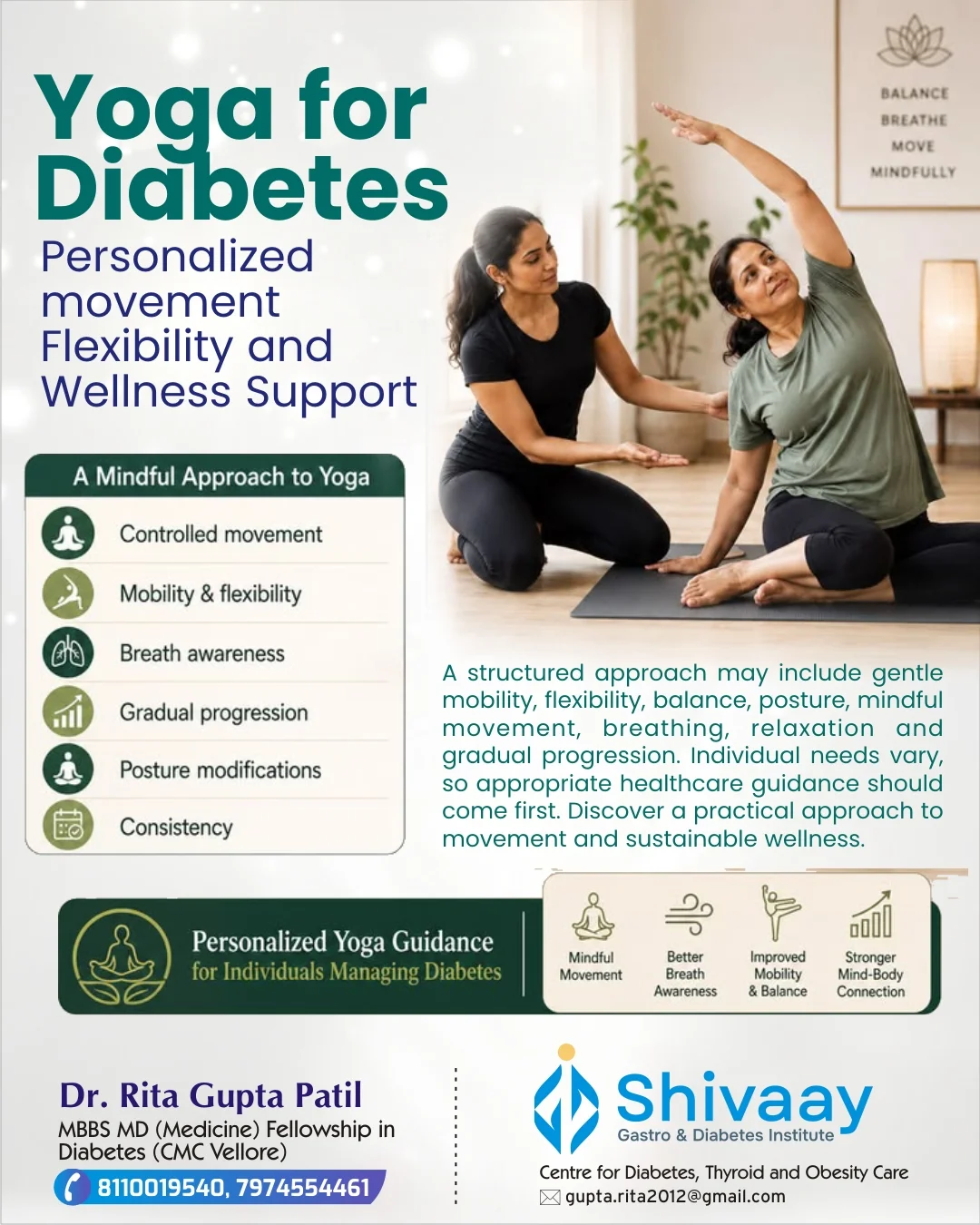
A suitable session does not need to be elaborate. The image’s emphasis on controlled movement, posture modifications, and consistency provides a practical starting point for discussing your goals.
An instructor may introduce comfortable movements suited to your available range. The aim is to explore movement without forcing your body into a position it cannot manage.
Tell the instructor which everyday actions feel difficult, such as reaching overhead or moving between sitting and standing.
Some participants may need chair-based options, wall support, or alternatives to floor positions. Discuss these requirements before joining a class so that suitable arrangements can be made.
An adapted movement is a valid part of practice, not a lesser achievement.
A session may include noticing your natural breathing and allowing time to settle between movements. Ask for beginner-friendly instruction rather than assuming that forceful breathing or prolonged breath-holding is necessary.
Progress can mean greater confidence, better familiarity with the sequence, or a routine that becomes easier to maintain. It does not have to involve deeper stretches or longer sessions.
Physical activity and diabetes management are closely connected. Activity can lower blood glucose, and the effect may continue after the session. People taking insulin or certain medicines, including sulfonylureas, have a greater risk of activity-related hypoglycaemia.
Before changing your routine, ask your diabetes care team:
· When should I check glucose around activity?
· How should sessions fit around meals and medication?
· What should I carry in case my glucose falls?
· Which readings or symptoms mean I should postpone exercise?
Use your individual plan rather than another participant’s advice. Do not skip meals, reduce medication, or stop insulin because you have started yoga.
If you become shaky, sweaty, dizzy, or confused, stop the activity and follow your prescribed low-glucose plan. Seek urgent help for severe symptoms or an inability to treat yourself safely.
For someone exploring diabetes wellness support in Indore, practical arrangements can determine whether a new habit lasts. A class may sound appealing but become difficult to attend if travel, work, or family responsibilities repeatedly interfere.
Choose a schedule you can realistically protect. Consider the journey, meal timing, access to drinking water, and whether the space allows you to practise comfortably.
Before booking, ask about:
· Experience adapting sessions for individual needs.
· Class size and opportunities for personal feedback.
· Availability of chairs or other supports.
· Permission to pause or modify movements.
· How medical restrictions are communicated.
A nearby option is useful, but suitability matters just as much as distance.
Bring your current medication list, recent glucose records, and available diabetes reports. You do not need to arrive with a complete exercise plan.
Instead, prepare a few clear observations. Explain what you currently do, what makes activity difficult, and what you hope to improve.
Your goals might include:
· Becoming more comfortable with regular movement.
· Finding an activity you enjoy.
· Building confidence after a period of inactivity.
· Making time for relaxation.
· Learning modifications for limited mobility.
For diabetes care in Indore, these personal details can make the consultation more useful than simply asking whether yoga is “good” or “bad.”
A calendar full of completed sessions is encouraging, but it does not tell the whole story. Keep a short record of how the routine fits your life and whether anything needs adjustment.
Note the session duration, movements that felt difficult, symptoms, and any glucose checks recommended by your clinician. Record questions while they are fresh in your mind.
Review these observations during follow-up. A routine that repeatedly leaves you uncomfortable or worried deserves modification.
Avoid judging success from one glucose reading. Your healthcare professional can interpret patterns alongside your treatment, meals, and other activity.
Yoga for diabetes management works best as a complementary activity. It belongs alongside appropriate nutrition, prescribed treatment, monitoring, and other suitable forms of movement.
Public diabetes guidance includes aerobic activity and muscle-strengthening exercise. A gentle yoga session may not provide the same activity intensity or training effect, so ask how it fits into your overall weekly plan.
Be cautious about programmes that promise medicine-free living through a specific pose. A helpful instructor respects medical advice and encourages realistic goals.
Many people can explore beginner practice, but the starting approach should reflect their health and physical abilities. Discuss complications, medication-related concerns, and necessary modifications before participating.
No single posture is an established substitute for diabetes treatment. A suitable routine considers the whole person rather than assigning one pose to everyone with the same diagnosis.
Do not follow a blanket fasting rule when you have diabetes. Ask your care team how to coordinate activity with meals and medication, particularly if you are at risk of low blood sugar.
No medication change should be made independently. If your glucose patterns change, discuss them with your prescribing clinician, who can assess whether treatment adjustments are appropriate.
Build an activity routine around your health, comfort, and everyday responsibilities. Consult Dr. Rita Gupta Patil at Shivaay Gastro & Diabetes Institute to discuss yoga for diabetes in Indore and how it may fit your individual care plan.
Bring your questions, share your goals, and take a practical step towards more consistent self-care.
Contact Us Today to Book Your Consultation.
| Tags: | #Yoga for Diabetes in Indore |


