
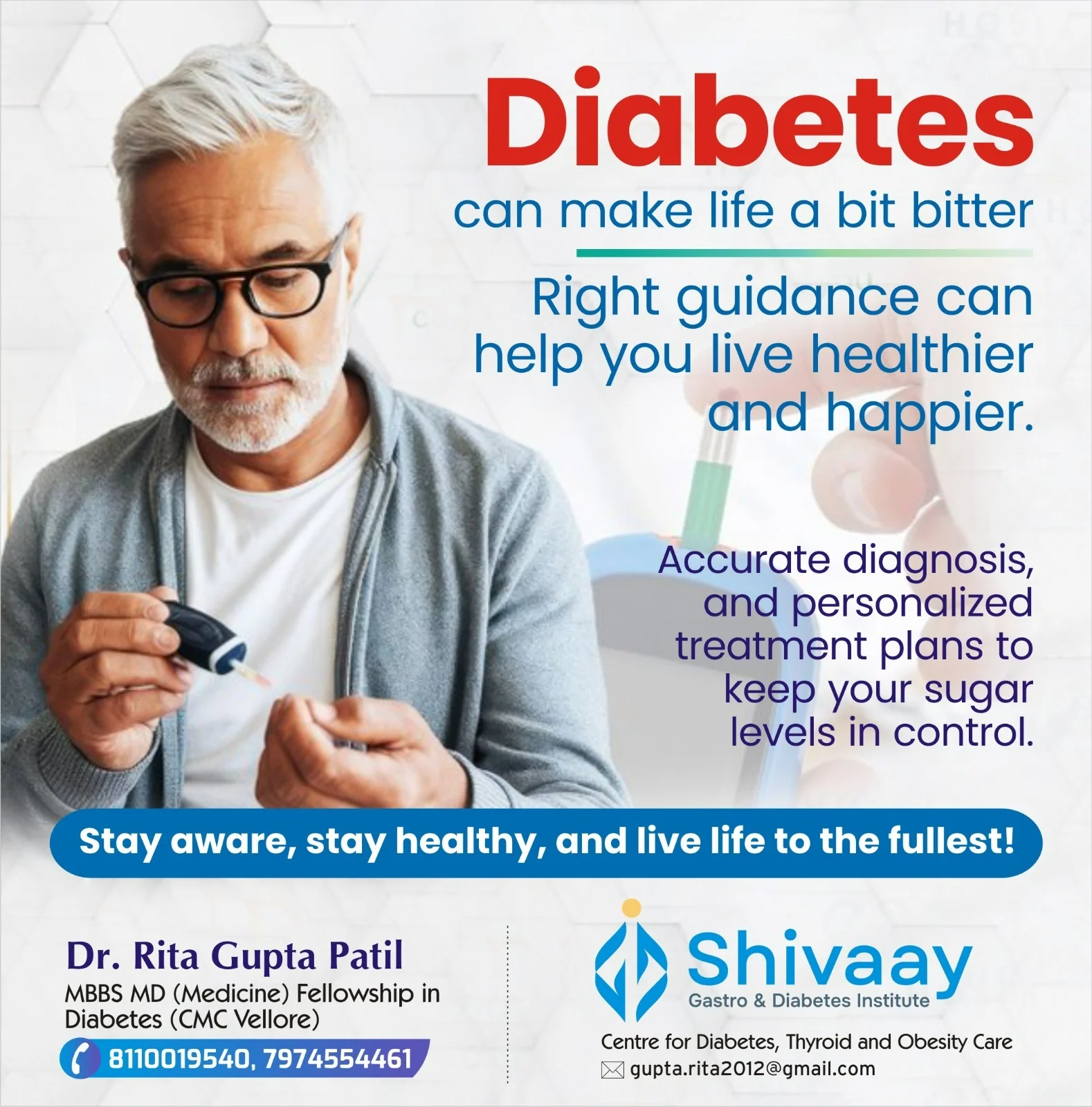
A diabetes diagnosis is often accompanied by issues that go beyond the test result. What To Eat? Will you be on medication forever? How to juggle social events, family obligations and work while controlling your blood sugar? Clear medical advice makes it so much simpler to turn those worries into actionable next steps.
Diabetes treatment in Indore starts with knowing your diagnosis, setting realistic health targets, and developing a plan for care that works for you. The treatment may include medication, dietary advice, exercise and monitoring and adjustments made according to how you are doing.
Dr. Rita Gupta Patil is a Diabetologist working as a Consultant at the Shivaay Gastro & Diabetic Institute. If you have just received an abnormal report or need a review of ongoing treatment, an appointment is a chance to discuss your concerns and understand your care plan.
What Does Diabetes Mean?
Diabetes occurs when blood glucose levels remain too high due to the insufficient or ineffective production of insulin. Insulin helps cells take in glucose for energy.
The principal kinds are:
• Type 1 diabetes: The body makes little or no insulin, so daily insulin therapy is necessary.
• Type 2 diabetes: The body may not make enough insulin to meet its needs and does not use it efficiently.
• Gestational diabetes: Diabetes that is diagnosed during pregnancy requires management specific to pregnancy.
Treatment needs vary for these conditions. First of all you have to find out what kind it is before you decide what to do with it.
Symptoms That Require Medical Attention
Diabetes doesn’t always announce itself. Some get high glucose after normal testing, others just notice changes in day to day health.
Diabetes can cause a variety of symptoms, such as:
• Increased thirst and urination.
• Chronic fatigueImpaired vision.
• Increased appetite.
• Loss of weight without explanation.
• Frequent infections or sores that do not heal.
Type 2 diabetes may not cause many symptoms and develop slowly. You don’t have to be in a healthy blood glucose range to feel well. Don't just listen to how you feel, talk to a professional about your symptoms and the need for screening.
Make a note of the time when your symptoms started and if they have changed before you go for a diabetes consultation in Indore. This can help to keep the conversation more focused.
How Is Diabetes Diagnosed?
Doctors use laboratory blood tests to diagnose diabetes. Depending on the circumstances, these may be an oral glucose tolerance test, HbA1c or fasting plasma glucose. If appropriate symptoms are present, a random plasma glucose test may be used.
HbA1c testing is used to estimate the average blood glucose over a period of about 3 months. However, the result should be interpreted clinically as there are situations that might affect its reliability.
Usually a second test is needed to confirm a diagnosis. Home glucose meters may be helpful for monitoring, but should not be used alone to diagnose diabetes.
Bring along previous reports and dates to your appointment. A doctor will often get more out of a series of results than from one isolated number.
The value of individualized diabetes care
Because of differences in their daily lives, health history and risks of treatment, two people with diabetes may need different approaches.
Diabetes care is individualized, considering age, other health problems, current medications, and the risk of low blood sugar. Your health care team will set your glucose goals and monitoring schedule.
Another component of care is monitoring cholesterol and blood pressure. Following the recommended course of therapy and monitoring progress can help prevent or delay diabetes-related health problems. If you are taking a prescription, speak to your doctor before stopping.
Let's be real about what the real world looks like. During your appointment explain if a medicine is expensive, meal times are erratic, or directions are unclear. The practical plan should be understandable and do-able.
Eat healthy without making every meal a production.
Getting a diagnosis can be overwhelming, and deciding what to eat can be even more so when social media and family advice are at odds.
When developing a diabetes diet plan, food preferences, portion sizes, medications and other medical requirements should all be considered. The balanced diet is the diet that contains vegetables, enough high carbohydrate foods, and moderate high protein foods. Sugary drinks can be replaced by water or unsweetened drinks.
Exercise is also good for controlling diabetes, but the type and amount of exercise should be appropriate to your condition and course of therapy. If you are taking medications that can lower blood sugar or have side effects that interfere with physical activity, discuss safety measures.
Indore families can have a fruitful discussion on nutrition with familiar meals instead of a totally alien food. Bring samples of your regular dinner, lunch, morning and snacks.
Ask questions such as:
• How do I manage portion sizes?
• How can I balance my normal breakfast?
• How do I go about planning meals when I am at work?
• What to say before you fast?
• How can I enjoy myself without throwing my care plan out the window?
The aim is to leave with concrete decisions that you can take home and put into action.
Look Beyond the Blood Sugar Number
Examination of the organs and tissues that can be affected by diabetes is also part of the long-term diabetes therapy.
Your doctor can recommend tests for your kidneys, your feet, your eyes and to measure your cardiovascular risk. The schedule will be dictated by your diabetes type, medical history and present findings. If you see new foot wounds, changes in your vision, or numbness, don't wait until your next regular consultation. Report these right away.
Keep your medicines and screening reports together. This makes it easier to decide what has been evaluated and what needs further investigation.
Prepare for a fruitful consultation
Before meeting an Indore diabetes doctor, prepare the facts you want to talk about.
Bring:
• Previous and current blood test results.
• A list of dosages, drugs, and supplements.
• Home glucose record if available.
• Details of any changes in previous therapy.
• Questions about food or activity or medication or symptoms.
• Relevant family and medical history
List your top three concerns prior to the appointment. For example, you might need help reading a report, managing a complicated medication schedule, or making sense of erratic readings.
Dr. Rita Gupta Patil is an MD in medicine, an MBBS, and a fellowship in diabetes from CMC Vellore. To book an appointment, check the current consultation location and availability of the appointment.
Know When a Standard Follow-Up Isn’t Enough
Severe symptoms should be assessed immediately. Shortness of breath, fainting or vomiting with stomach pain can be a sign of a diabetes emergency, especially if your blood sugar is high. Don’t wait for a scheduled appointment, go get medical attention immediately.
Frequently Asked Questions
1. Is it possible to get diabetes and not have any symptoms?
Yes. “Type 2 diabetes can develop without obvious symptoms. Your doctor will determine if testing is appropriate for you based on your medical history and risk factors. Symptoms alone do not confirm or exclude the disorder.
2. Does everyone with diabetes require insulin?
No, people with type 1 diabetes need insulin. Type 2 diabetes is treated differently. Insulin is also needed by some people with type 2 diabetes. Your doctor will tell you what is the best treatment for your illness.
3. If my readings are better, is it time to come off my medication?
Never stop taking prescribed medication on your own. If the readings are better, the strategy might be working right now. Your doctor may decide that a change is needed after going over the results with you.
4. What to ask during your first consultation?
Know what your diagnosis is, what targets you need to meet, how to take your medications, and when you need to come back. In addition, specify what documents to keep and how to get help between meetings.
Keep Moving Forward with Improved Diabetes Care
Being informed about your health can make everyday choices easier. At a consultation you can look at your reports, discuss any problems and decide what to do next.
Book Appointment with Dr. Rita Gupta Patil at Shivaay Gastro & Diabetes Institute for Diabetes Treatment in Indore.
Call us today to schedule your diabetes consultation.
| Tags: | #Diabetes Care in Indore |


