
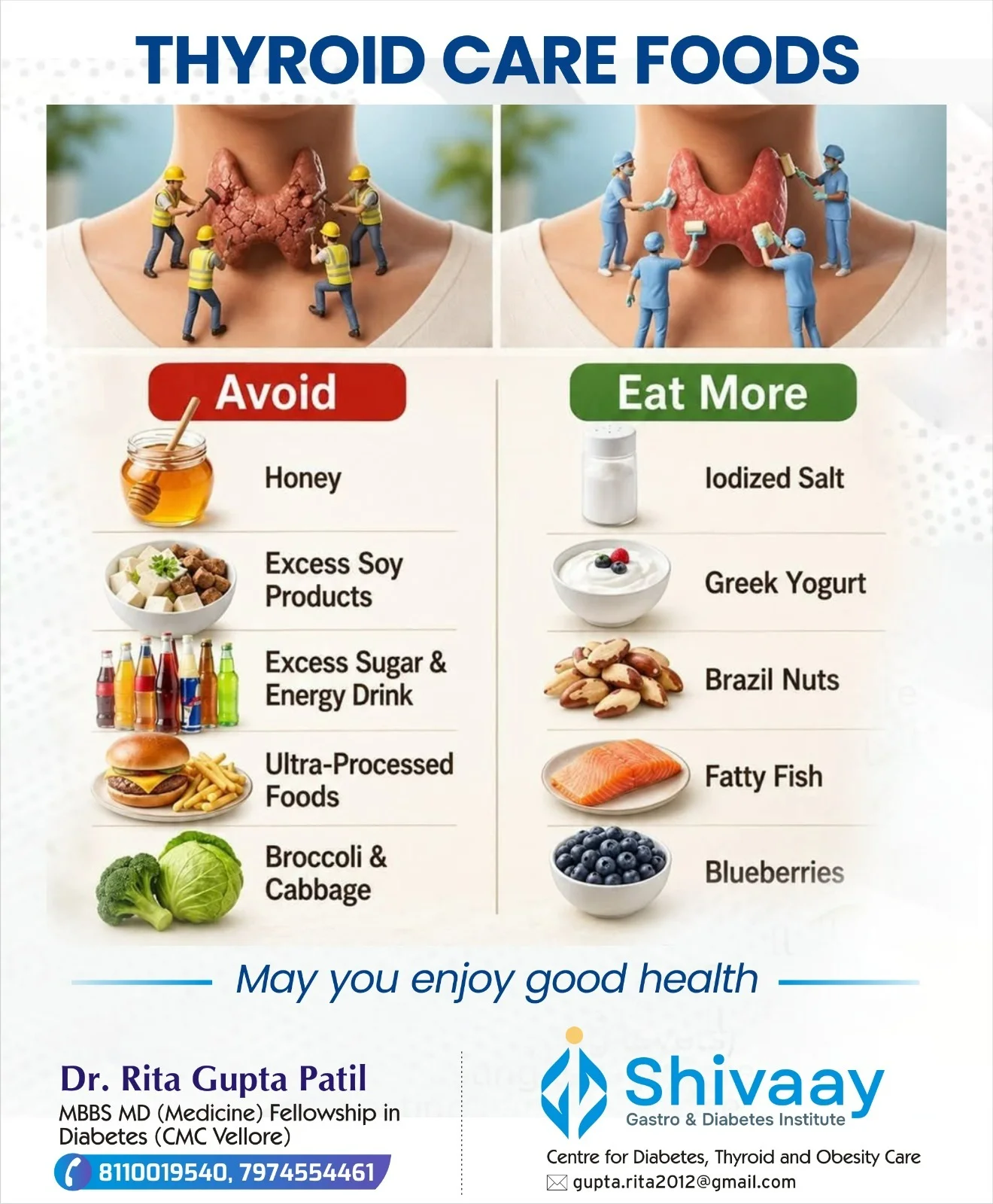
Thyroid Care Foods: What to Eat and What to Limit for Better Thyroid Health
The thyroid is a small gland in the neck, but it plays an important role in metabolism, energy use, body temperature, heart function, and many other processes. When thyroid hormone production becomes too low or too high, people may experience symptoms such as fatigue, unexpected weight changes, changes in heart rate, sensitivity to heat or cold, or difficulty concentrating.
Nutrition cannot replace proper diagnosis or prescribed thyroid treatment, but choosing balanced thyroid care foods can support overall health and help provide nutrients involved in normal thyroid function. Shivaay Gastro & Diabetes Institute emphasizes that thyroid diets should be individualized because the right food choices can differ depending on whether someone has hypothyroidism, hyperthyroidism, Hashimoto's disease, another thyroid condition, or no diagnosed thyroid disorder.
There is no single "thyroid diet" that cures thyroid disease. Instead, a balanced eating pattern that provides adequate iodine, selenium, protein, vitamins, minerals, vegetables, fruits, and healthy fats is generally more useful.
Iodine deserves particular attention because the body requires it to produce thyroid hormones. However, both insufficient and excessive iodine intake can affect thyroid function, so more iodine is not automatically better.
People searching for thyroid care foods in Indore should focus on nutritional balance rather than following restrictive food lists found on social media.
Iodine is an essential component of thyroid hormones T3 and T4. One common dietary source is iodized salt. Other sources can include dairy products, eggs, seafood, meat, and poultry.
Using iodized salt does not mean increasing total salt consumption. The goal is adequate iodine intake while still following appropriate limits on sodium, especially for people with high blood pressure or other health concerns.
Excessive iodine from supplements, kelp, or seaweed can sometimes trigger or worsen thyroid dysfunction in susceptible individuals.
Use iodized salt in normal cooking amounts if it is suitable for your health condition, but avoid starting iodine supplements without medical advice.
Selenium is another nutrient involved in thyroid physiology. Selenium deficiency can interact with iodine deficiency and may adversely affect thyroid health.
Food sources of selenium can include:
· Brazil nuts
· Eggs
· Fish and seafood
· Poultry
· Meat
· Some cereals and grains
Brazil nuts are especially rich in selenium, so eating large quantities every day is unnecessary. Nutrients are best consumed in appropriate amounts rather than assuming that higher intake will provide greater benefits.
Protein helps support muscle health, recovery, immunity, and overall nutrition. People with thyroid disorders can include suitable protein sources according to their dietary preferences.
Options may include:
· Curd or Greek yogurt
· Milk and dairy products
· Eggs
· Fish
· Chicken
· Dal and pulses
· Beans
· Paneer
· Nuts and seeds
For people following vegetarian diets, combining different plant-based protein sources throughout the day can help improve nutritional variety.
Fish can provide high-quality protein and important nutrients. Fatty fish such as salmon, sardines, or similar varieties also provide omega-3 fatty acids.
Fish can be part of a balanced thyroid-friendly diet, but it is not a treatment for thyroid disease by itself.
People with specific medical conditions, allergies, dietary restrictions, or pregnancy-related requirements should choose seafood according to professional dietary advice.
Fresh fruits contribute fiber, vitamins, minerals, and naturally occurring plant compounds.
Useful options may include:
· Berries
· Guava
· Oranges
· Apples
· Papaya
· Pomegranate
· Seasonal local fruits
Blueberries are frequently promoted as a "thyroid superfood," but they do not specifically treat thyroid disorders. Their benefit comes from being a nutritious fruit that can form part of an overall healthy dietary pattern.
For people looking for thyroid diet guidance in Indore, locally available seasonal fruits can be just as useful as expensive imported options.
One common misconception is that everyone with hypothyroidism must completely stop eating broccoli, cabbage, cauliflower, and other cruciferous vegetables.
These vegetables contain substances sometimes called goitrogens, but for most people consuming normal amounts as part of a varied diet, complete avoidance is generally unnecessary, particularly when iodine intake is adequate.
Cooking these vegetables can also reduce their goitrogenic activity.
Rather than eliminating nutritious vegetables without reason, discuss unusually high consumption or a known iodine deficiency with a qualified healthcare professional.
Instead of labeling ordinary foods as completely "good" or "bad," it is more useful to look at overall quantity and dietary pattern.
Frequent consumption of sugary drinks, sweets, desserts, and heavily sweetened packaged foods can increase overall calorie intake without providing much nutritional value.
For people who also have obesity, insulin resistance, diabetes, or high triglycerides, reducing added sugar can be particularly important.
Many energy drinks contain high amounts of sugar and caffeine. They are not required for thyroid health and may cause palpitations, sleep problems, or excessive calorie intake in some people.
Highly processed foods often contain excessive amounts of salt, refined carbohydrates, saturated fat, or added sugar.
Examples may include:
· Packaged fried snacks
· Highly processed fast foods
· Sugary bakery products
· Instant convenience meals
· Processed meats
· Sweetened beverages
The goal does not need to be complete prohibition. Instead, keep these foods occasional and prioritize fresh, minimally processed meals.
Soy is another food frequently misunderstood in discussions about hypothyroidism.
People taking levothyroxine should know that certain foods and supplements can affect how well the medicine is absorbed. Instead of automatically eliminating soy, the timing of thyroid medication and meals may need to be adjusted based on medical advice.
Soy foods such as tofu, soybeans, and soy milk can still provide protein and other nutrients for many people.
If you regularly consume substantial amounts of soy and take thyroid medication, discuss your eating schedule with your doctor rather than removing soy unnecessarily.
Honey is not specifically toxic to the thyroid, nor does avoiding honey cure thyroid disease.
However, honey is a source of sugar. Therefore, frequent or excessive consumption can add significant calories and carbohydrates to the diet.
People managing:
· Diabetes
· Prediabetes
· Obesity
· Fatty liver
· High triglycerides
may need to pay particular attention to portion size.
For thyroid health, it is more accurate to say limit excessive added sugars, including excessive honey, rather than declaring honey completely forbidden.
People with hypothyroidism are commonly treated with levothyroxine, a thyroid hormone replacement medicine.
Medication should be taken exactly as prescribed. Certain foods, supplements, and medicines can interfere with its absorption, so consistency in timing is important.
Do not change your dose, stop medication, or alter the timing simply because you have changed your diet. Thyroid hormone levels are generally monitored through blood testing, and medication adjustments should be made by the treating doctor.
Because iodine is necessary for thyroid hormone production, people sometimes assume iodine tablets or seaweed supplements will improve any thyroid condition.
This can be risky.
Large amounts of iodine from kelp, seaweed, supplements, or iodine-containing products can cause or worsen hypothyroidism in some people. Excessive iodine may also worsen hyperthyroidism in susceptible individuals.
Therefore, thyroid care nutrition should focus on adequate rather than excessive iodine intake.
A balanced Indian meal pattern can provide good nutrition without requiring unusual or expensive foods.
Consider options such as:
· Vegetable poha with curd
· Idli with sambar
· Oats with milk and nuts
· Eggs with whole-grain toast
· Besan or moong chilla with vegetables
A balanced plate might include:
· Roti or rice
· Dal, paneer, fish, or another protein source
· Cooked vegetables
· Salad
· Curd
Choose options such as:
· Fruit
· Unsweetened curd
· Roasted chana
· A small portion of nuts
· Buttermilk when appropriate
Keep dinner balanced with:
· Vegetables
· Protein
· Moderate portions of whole grains
· Limited deep-fried or heavily processed foods
The ideal quantity depends on age, activity level, weight goals, diabetes status, medications, and other medical conditions.
A person with hypothyroidism may have very different nutritional needs from someone with Graves' disease, pregnancy-related thyroid disease, diabetes, obesity, or another hormonal condition.
This is why generic internet diet charts may not always be appropriate.
People seeking thyroid care in Indore, thyroid diet consultation in Indore, or support for weight and metabolic health should consider factors such as:
· TSH and thyroid hormone results
· Current medication
· Body weight
· Diabetes status
· Cholesterol levels
· Pregnancy
· Other medical conditions
· Dietary preferences
· Nutrient deficiencies
Shivaay Gastro & Diabetes Institute supports patients who need individualized evaluation for thyroid, diabetes, obesity, and associated metabolic concerns rather than relying only on restrictive food rules.
No. Diet can support overall health, but hypothyroidism and other thyroid disorders often require medical evaluation and, when indicated, medication. For example, levothyroxine is a standard treatment for hypothyroidism.
Not necessarily. Most people do not need to completely eliminate cruciferous vegetables. Normal portions, especially when cooked and consumed as part of a balanced diet, can generally be included unless your doctor advises otherwise.
Brazil nuts contain selenium, which has roles in thyroid physiology. However, they can contain very high amounts of selenium, so excessive consumption is unnecessary.
Not without medical advice. Both too little and too much iodine can affect thyroid function, and excessive iodine may worsen certain thyroid conditions.
A healthy thyroid diet is not about completely banning common foods or relying on one "superfood." It is about balanced nutrition, appropriate iodine intake, adequate protein and micronutrients, reduced consumption of highly processed foods, and correct use of prescribed medication.
If you are experiencing unexplained weight changes, persistent fatigue, unusual sensitivity to heat or cold, or have already been diagnosed with a thyroid disorder, professional assessment can help you understand what your body actually needs.
For personalized thyroid care in Indore, nutrition guidance, thyroid evaluation, and support for associated diabetes or weight concerns, schedule a consultation with a qualified healthcare professional. Contact Us today to receive guidance based on your health profile rather than following one-size-fits-all diet restrictions.
| Tags: | #Thyroid Diet Guidance in Indore |


