
Hypothyroidism Specialist in Indore: Understand the Symptoms, Diagnosis and Treatment
Hypothyroidism develops when the thyroid gland does not produce enough thyroid hormones to support the body’s normal functions. Because thyroid hormones influence metabolism, energy, body temperature, digestion, skin health, menstrual cycles and mental alertness, reduced hormone production can affect several areas of daily life.
The symptoms often develop gradually and may resemble stress, nutritional deficiencies, ageing or other medical conditions. Persistent tiredness, unexplained weight gain, constipation, dry skin, hair thinning or increased sensitivity to cold should therefore not be ignored. Consulting a qualified Hypothyroidism Specialist in Indore can help identify whether these concerns are related to thyroid function or another underlying condition.
Dr. Rita Gupta Patil provides evaluation and management support for people experiencing possible thyroid-related symptoms, helping them understand their test results and personalised care requirements.
The thyroid is a small, butterfly-shaped gland located in the front of the neck. It produces hormones that help regulate how the body uses energy. Hypothyroidism, also called an underactive thyroid, occurs when the gland does not make sufficient thyroid hormones.
Hashimoto’s disease, an autoimmune condition in which the immune system attacks thyroid tissue, is a common cause. Hypothyroidism can also develop following thyroid surgery, radioactive iodine treatment, radiation involving the neck, certain medicines or problems affecting the pituitary gland.
The condition cannot be diagnosed from symptoms alone because many of its signs overlap with other health problems. Blood tests are required to assess thyroid function accurately.
Symptoms vary considerably from person to person. Some individuals experience several concerns, while others have few noticeable signs despite abnormal thyroid test results.
Common symptoms may include:
Not everyone with hypothyroidism develops every symptom, and similar problems may occur in people with normal thyroid function. This is why professional assessment is more reliable than self-diagnosis.
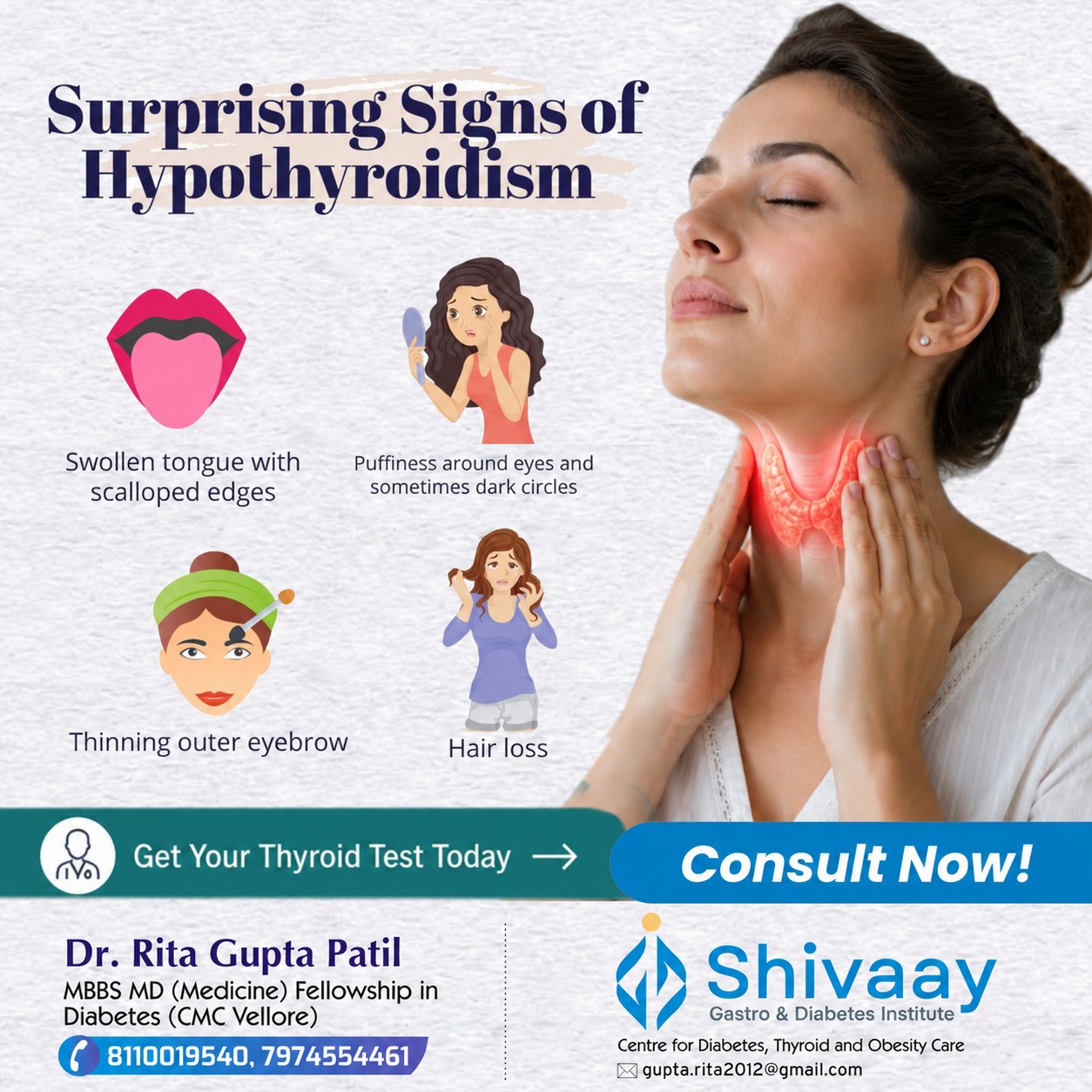
Some thyroid-related changes are easy to overlook because they may not initially seem connected to hormonal health.
A tongue that appears enlarged or shows impressions along its edges may sometimes be noticed in people with hypothyroidism. However, this sign is not specific to thyroid disease and may have other causes. It should be considered alongside symptoms and laboratory findings rather than used as a standalone diagnostic sign.
Fluid retention may lead to facial puffiness, particularly around the eyelids. Some people also report that their face looks more swollen in the morning.
Reduced thyroid activity may affect the normal hair-growth cycle. Diffuse hair loss or thinning near the outer edge of the eyebrows can occur, although nutritional deficiencies, hormonal changes, stress and scalp conditions can produce similar effects.
A deeper, rougher or persistently hoarse voice can occasionally accompany hypothyroidism. Any continuing voice change should also be evaluated for non-thyroid causes.
Some people describe mental slowing, forgetfulness or difficulty concentrating. Research summarised by the American Thyroid Association notes that concentration and memory complaints may occur with hypothyroidism and can improve after appropriate treatment.
Consider arranging an appointment with a thyroid doctor in Indore when several symptoms continue for weeks, interfere with daily activities or occur alongside a family history of thyroid disease.
Medical evaluation may be particularly useful when you notice:
Pregnancy requires special attention because untreated or inadequately controlled hypothyroidism can increase pregnancy-related risks. Anyone who is pregnant, planning pregnancy or receiving fertility treatment should discuss thyroid testing and medication monitoring with a doctor.
A diagnosis usually combines medical history, physical examination and blood investigations. A doctor may ask about changes in energy, weight, bowel habits, menstrual pattern, skin, hair, mood, medicines, pregnancy history and previous thyroid treatment.
Thyroid-stimulating hormone, or TSH, is produced by the pituitary gland. It signals the thyroid to make hormones. In primary hypothyroidism, TSH is often elevated because the body is attempting to stimulate an underactive thyroid.
Free T4 measures the amount of available thyroxine in the blood. The relationship between TSH and free T4 helps the doctor understand whether thyroid function is reduced and how significant the abnormality may be.
When an autoimmune cause such as Hashimoto’s disease is suspected, antibody testing may be advised. These results help clarify the likely cause, although they are not required in every patient.
Depending on the symptoms, a doctor may also consider blood tests for anaemia, vitamin deficiencies, blood sugar, cholesterol, liver function or other hormonal concerns. This is because fatigue, hair fall and weight changes are not exclusive to thyroid disorders.
The American Thyroid Association states that medical history, examination and laboratory measurements, particularly TSH, form the initial steps in diagnosing hypothyroidism.
Subclinical hypothyroidism generally describes a situation where TSH is above the reference range while free T4 remains within the normal range. Some people have symptoms, while others feel completely well.
Treatment is not automatically required for every case. The decision may depend on:
A hypothyroidism doctor in Indore can interpret these factors together rather than relying on one laboratory value in isolation.
The standard treatment for most people with established hypothyroidism is thyroid hormone replacement, commonly with levothyroxine, a synthetic form of T4. The dose is selected according to individual needs and may depend on age, body weight, severity of hormone deficiency, pregnancy status and other medical conditions.
Treatment aims to restore thyroid hormone levels and improve symptoms without giving more hormone than the body requires.
After treatment begins or the dosage changes, thyroid blood tests are often repeated after an appropriate interval. The National Institute of Diabetes and Digestive and Kidney Diseases notes that testing may be performed around six to eight weeks after starting medicine so the dose can be adjusted when necessary.
Once hormone levels and the dose become stable, follow-up testing may be less frequent. The exact schedule should be decided by the treating doctor.
Absorption of thyroid medication can be influenced by food, supplements and other medicines. Patients should follow their doctor’s instructions regarding timing and maintain a consistent routine.
Calcium supplements, iron tablets, certain antacids and some other medicines may interfere with absorption when taken too close to thyroid medication. Do not stop or rearrange prescribed medicines without medical guidance.
Taking too little medicine may leave hypothyroidism uncontrolled. Taking too much can produce symptoms of excessive thyroid hormone, such as palpitations, tremors, sweating, anxiety or sleep disturbance. Dose changes should always be based on symptoms, medical history and blood-test results.
Diet supports general health, but established hypothyroidism usually cannot be corrected through food alone. Patients should be cautious about products promoted as “thyroid cures,” particularly supplements containing unregulated iodine or thyroid extracts.
A balanced eating pattern may include:
Excessive iodine can also disturb thyroid function, so more is not necessarily better. Supplements should be used only after discussing their need with a healthcare professional.
Hypothyroidism is usually manageable, but follow-up is important because medication requirements may change with age, weight variation, pregnancy, new medicines or other health conditions.
Regular thyroid treatment in Indore can help:
Some people continue to experience fatigue, hair fall or weight concerns even after thyroid levels normalise. In such cases, the doctor may evaluate other possible causes instead of repeatedly increasing thyroid medication.
When searching for the best thyroid specialist in Indore, choose a doctor who carefully reviews symptoms, laboratory reports, medication history and associated concerns.
A patient-focused consultation should include:
Effective thyroid care is based on accurate diagnosis and ongoing monitoring rather than treating every symptom as a thyroid problem.
Yes, an underactive thyroid may contribute to weight gain by slowing metabolic processes and causing fluid retention. However, weight gain can have multiple causes, so thyroid testing is needed before linking it to hypothyroidism.
It is lifelong in many cases, particularly when caused by permanent thyroid damage or Hashimoto’s disease. Some temporary forms can improve, so treatment duration should be determined by a doctor.
A normal result often means the medicine is working. Stopping it without medical advice may allow hormone levels to become abnormal again. Always consult your doctor before making changes.
Testing frequency depends on whether treatment has recently started, the dose has changed, pregnancy is present or thyroid levels are stable. Your doctor will recommend a schedule based on your individual situation.
Persistent fatigue, hair thinning, constipation, menstrual changes, facial puffiness or unexplained weight gain deserve proper evaluation rather than guesswork. Early testing can clarify whether the thyroid is involved and help guide appropriate treatment.
For personalised evaluation by a Hypothyroidism Specialist in Indore, consult Dr. Rita Gupta Patil for thyroid testing guidance, report interpretation, medication monitoring and long-term management. Contact Us Today to schedule your consultation and take a well-informed step towards better thyroid health.
| Tags: | #Hypothyroidism Specialist in Indore |


